
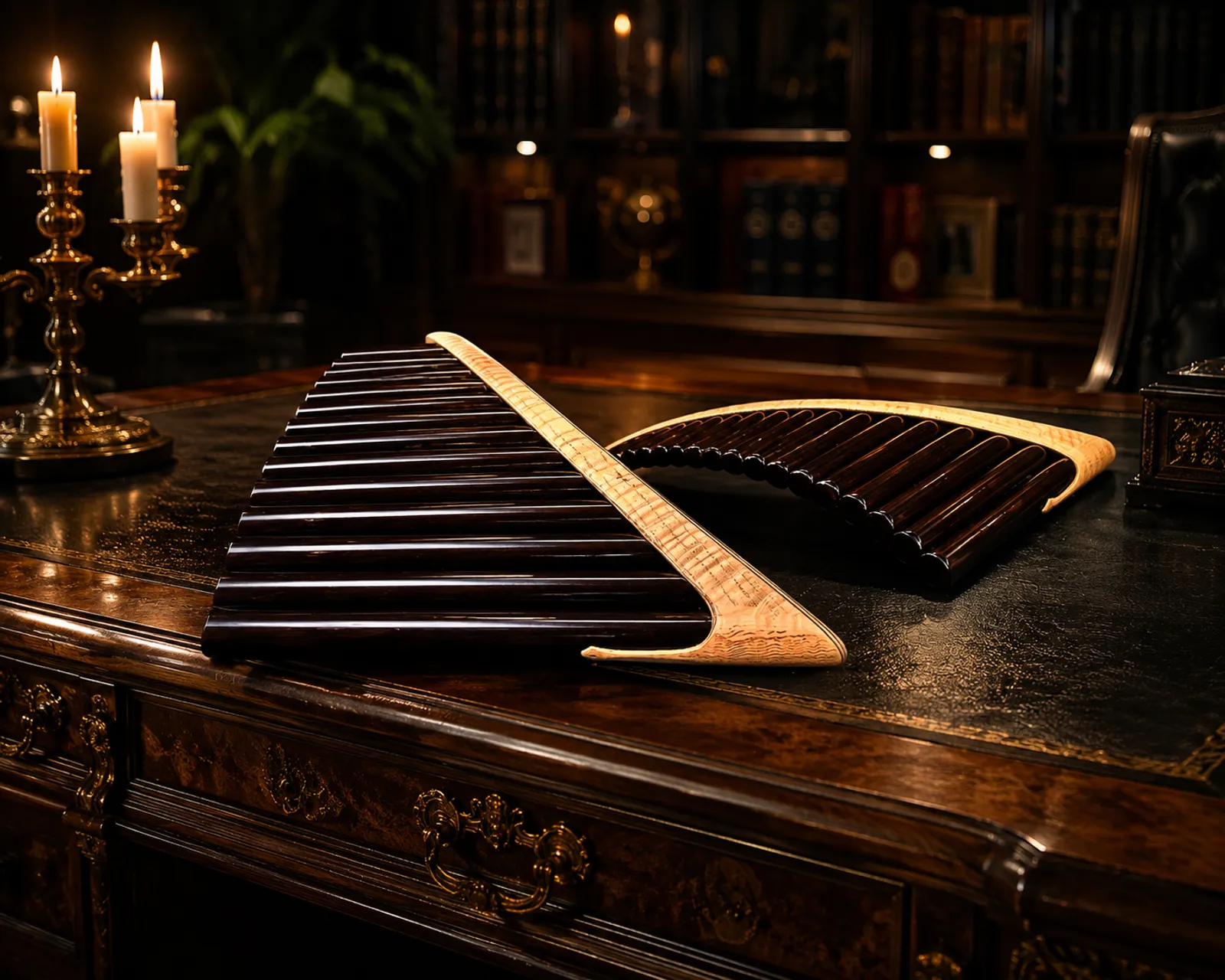
What is the pan flute
A row of pipes of differing length bound side by side. No keys, no mechanism - just breath, edge and reed. And yet a sound that has accompanied listeners for thousands of years.
The pan flute is a wind instrument made of a row of little tubes - pipes - of differing length, bound side by side. Each tube produces a single note: the longer it is, the deeper it sounds. The pipes are closed at the bottom and the tone is made by blowing across their top edge, much like whistling over the neck of a bottle.
The instrument has no keys or other mechanism. The player chooses the pitch by picking a tube and by everything else - breath, articulation, the tilt of the instrument and the work of the jaw. This very simplicity is the most beautiful thing about the pan flute: nothing stands between player and tone but air.
The character of the sound is often described as soft, ethereal and breathy - of all instruments it perhaps comes closest to the human voice. From a whisper to the bright, carrying tone of a concert hall.
What the pan flute is made of
Five places on which the whole sound rests. Go through the instrument point by point.
Hover over the numbered points in the diagram - each reveals one part of the instrument.
How the sound is made and how it's played
The player leads a stream of breath across the pipe's edge and searches for the exact angle at which the tone sounds cleanly. Between notes the instrument slides in front of the lips - smoothly, so quickly that the listener hears a continuous melody.
Semitones and fine shades of pitch arise from tilting the instrument and moving the jaw: narrowing the pipe's opening lowers the tone. Add vibrato shaped by the breath and you get the expression with which the pan flute “sings” - and the reason it is said to come closest of all instruments to the human voice.
That is precisely why playing the pan flute is an art of breath. No keys help with intonation - everything is in the ear, the breath and years of practice.
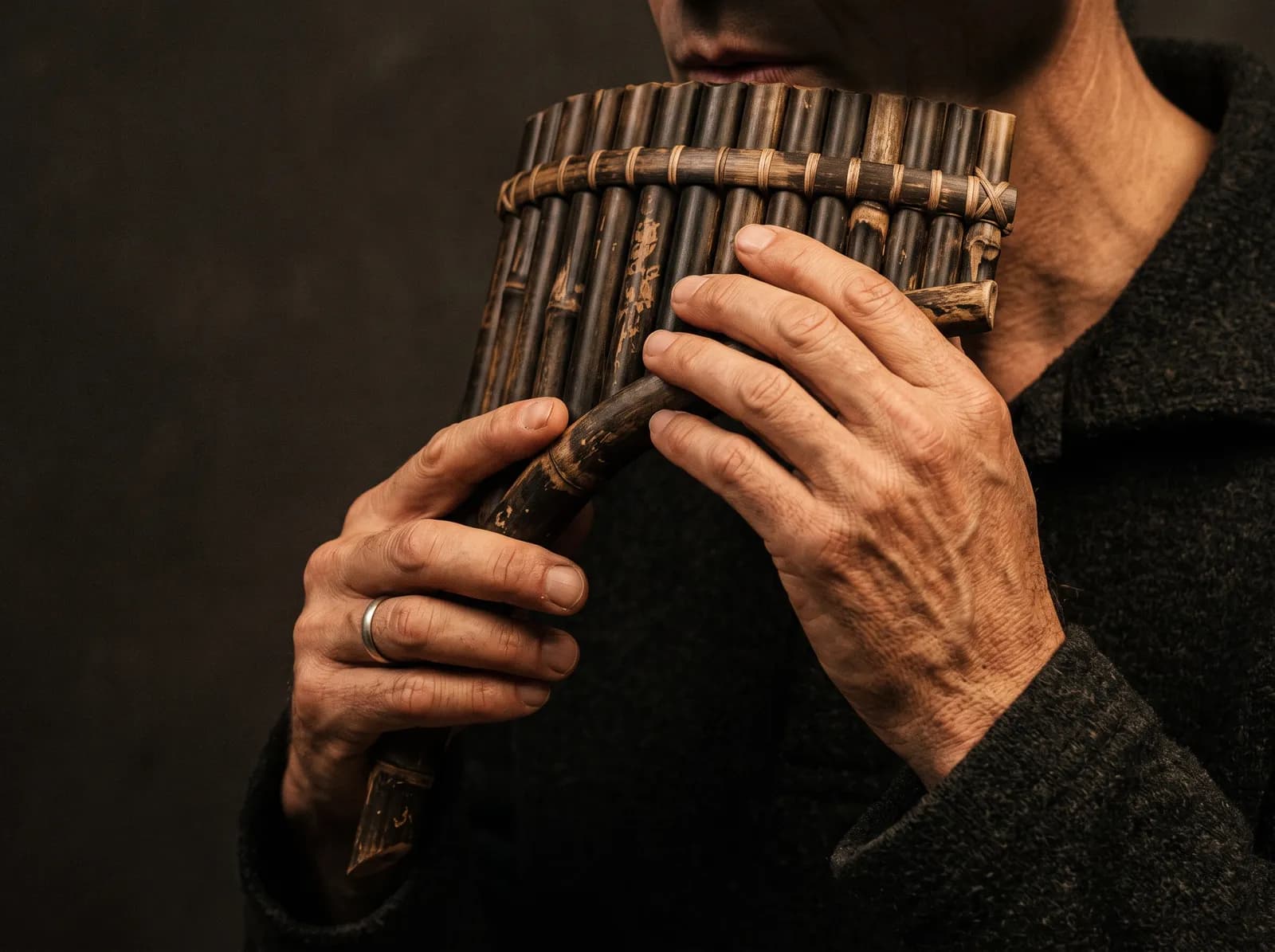
Pitch is tuned by tilting the instrument and working the jaw. Illustrative photo.
Construction and materials
The traditional material is reed and cane - in Europe above all the giant reed Arundo donax - as well as bamboo and wood. Modern instruments are also made of metal, plastic, ceramic or glass, but the traditional materials remain unsurpassed for their warm, organic tone.
The making is a craft: the tubes are cut, dried, tuned and assembled so that the pipes fit together perfectly and the instrument sounds even across its whole range. Every piece is therefore an original - with its own grain of material and small variations in the colour of its tone.
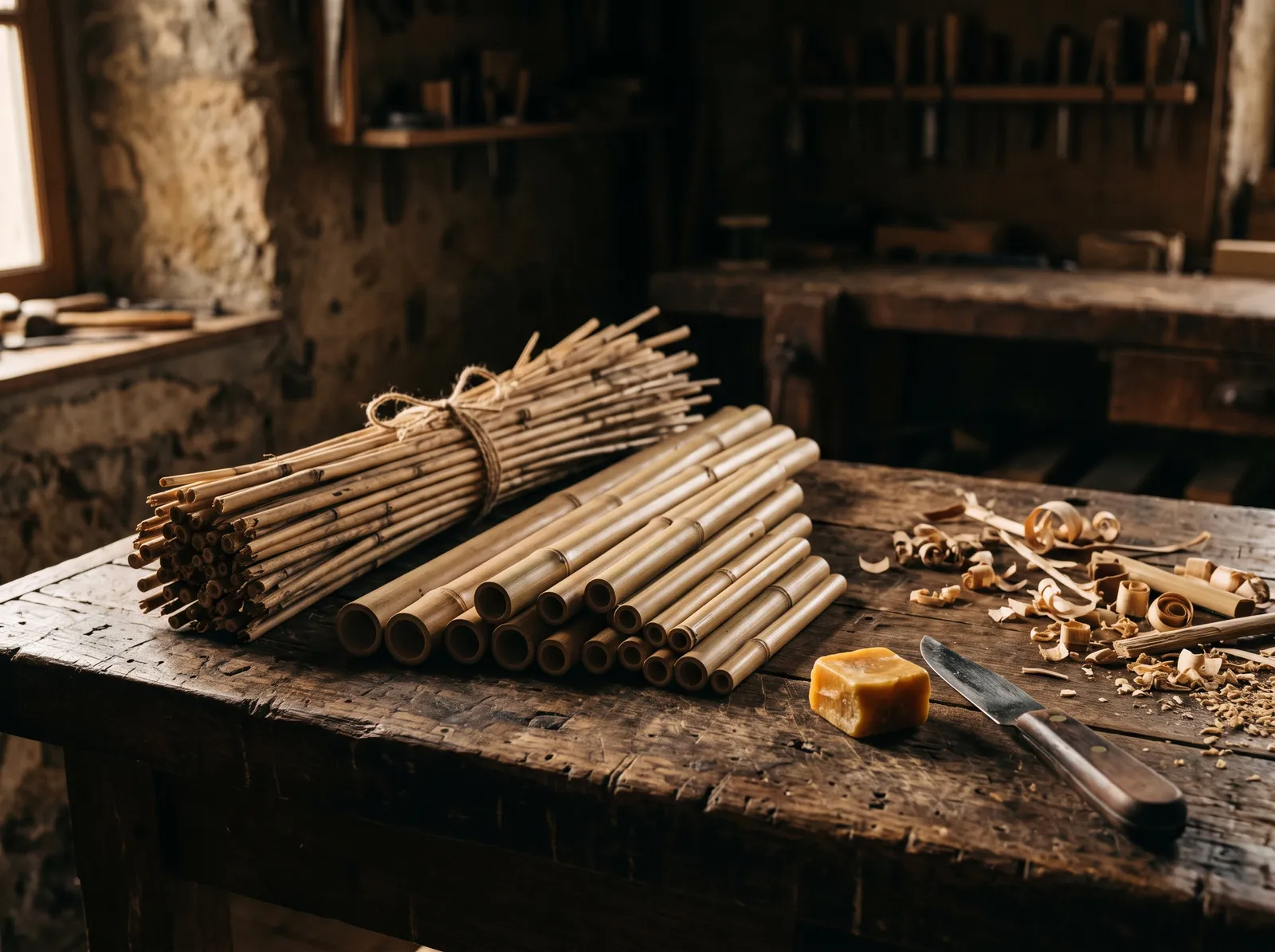
Reed, Arundo donax cane, bamboo and wood. Illustrative photo.
The instrument's family around the world
The pan flute arose independently in several places around the world - wherever reed grows and wherever people sought a simple way to turn breath into melody. Each culture gave it its own name, shape and repertoire.
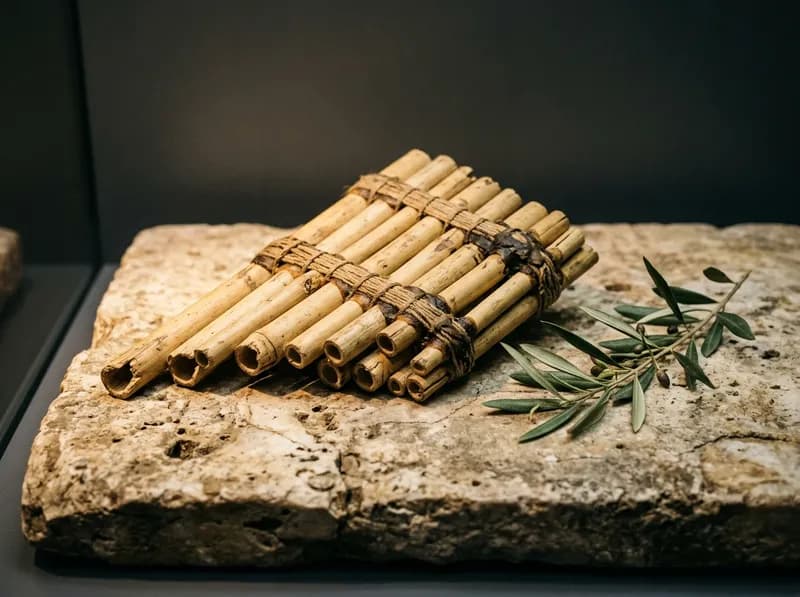
The original form and name - after the nymph from the myth of the god Pan. A shepherd's instrument of antiquity, written of by both Ovid and Virgil.
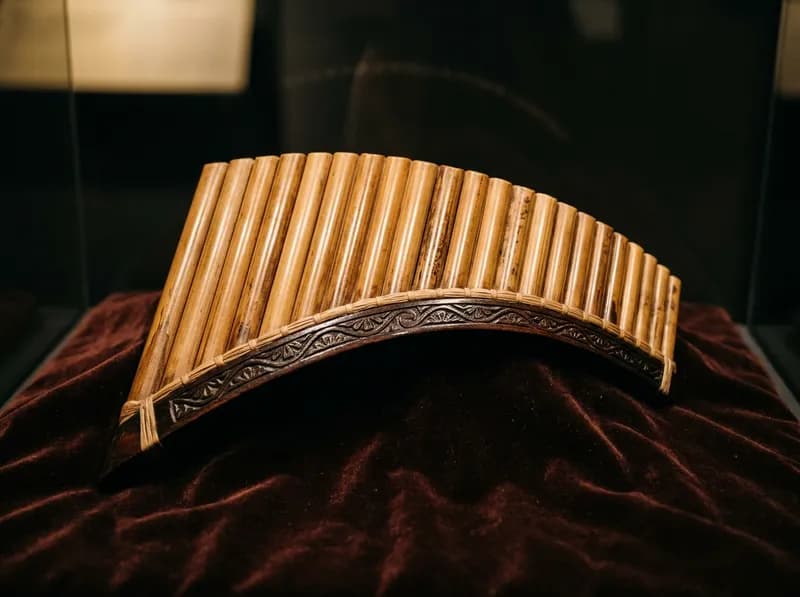
The curved concert form with 20 pipes as standard. The Romanian school turned a folk instrument into a virtuoso phenomenon of the 20th century.
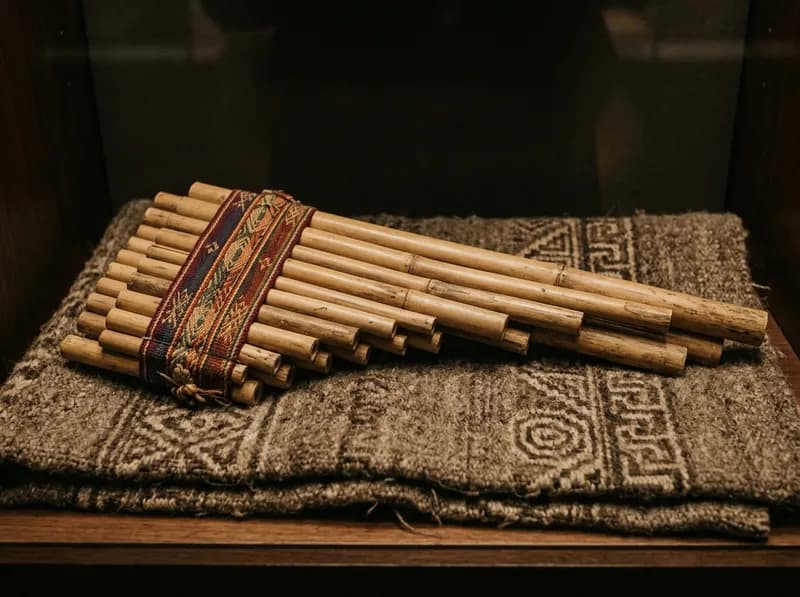
Straight, double-rowed pipes bound like a raft. Siku in Aymara, zampoña in Spanish - the soul of Andean music, often played in pairs.
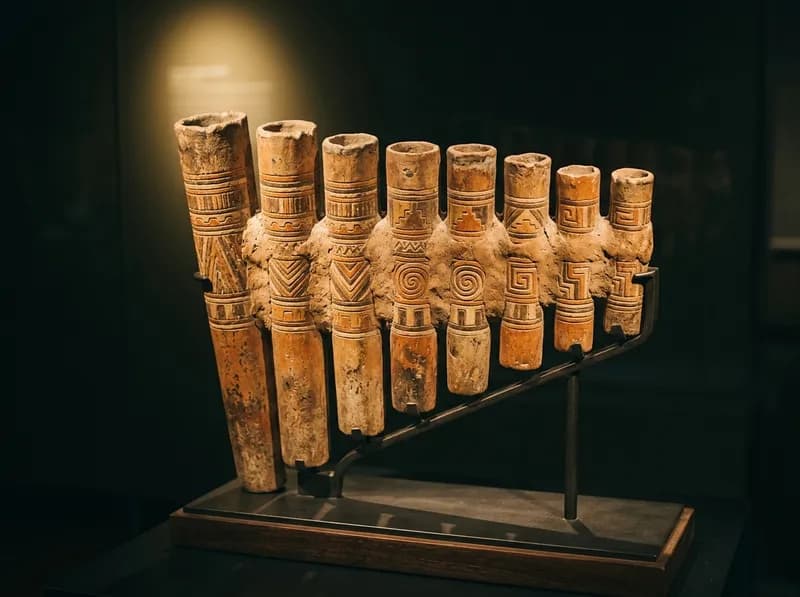
A single-rowed pipe with a Quechua name. Ceramic antaras have survived in the graves of the Paracas and Nazca cultures.
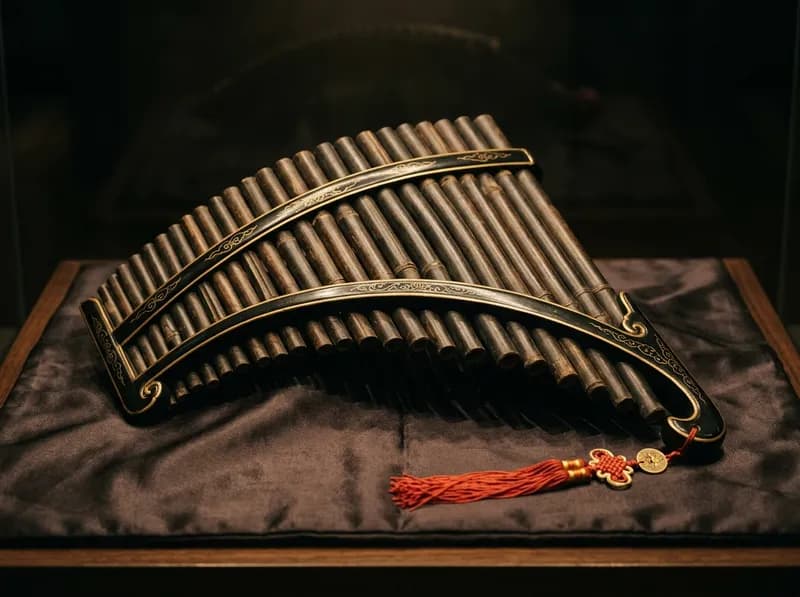
Bamboo pipes set into the shape of an open wing. Two beautifully preserved pieces were found in the tomb of Marquis Yi of Zeng (5th century BC).
Alongside the five best-known forms, the family is completed by further relatives: the Lao and Thai wot with tubes set in a circle, the Georgian larchemi (soinari) of six pipes, or the Ukrainian kuvytsi.
Frequently asked questions about the pan flute
The pan flute is a wind instrument made of a row of pipes of differing length bound side by side. Each pipe produces one note, whose pitch depends on the length of the tube. It is among the oldest wind instruments of humankind.
The pan flute is played by blowing across the top edge of a pipe, much like across a bottle's neck. The instrument has no keys - the player chooses the note by selecting a pipe and sliding the instrument in front of the lips. Semitones arise from tilting the instrument and working the jaw.
The pan flute is traditionally made of reed, Arundo donax cane, bamboo or wood. Modern instruments are also made of metal, plastic, ceramic or glass. Traditional natural materials remain popular for their warm, organic tone.
The standard Romanian concert nai has 20 pipes. Extended concert versions, such as those played by Gheorghe Zamfir, have 22 to 30 pipes. The number of pipes determines the instrument's tonal range.
The sound is created at the top edge of a pipe: the stream of breath breaks against it and sets the column of air inside the tube vibrating. The pipes are closed at the bottom, so they sound an octave lower than open tubes of the same length - which is why the instrument can be compact.
The pan flute has many forms and names around the world: syrinx in ancient Greece, nai in Romania, siku and zampoña in the Andes, antara in Peru and paixiao in China. The instrument arose independently on several continents.
Content verified from trustworthy sources; last reviewed July 24, 2026.
Now that you know how it sounds - where did it come from?
The story of the pan flute leads from a Greek myth through Neolithic burial grounds all the way to the world's stages.