
From myth to today
The story of the pan flute begins in a Greek myth and leads through Neolithic burial grounds, Chinese tombs and Andean cultures all the way to the world's concert stages. It is among the oldest wind instruments humankind knows.
The nymph who turned into reeds
Pan, the god of pastures, glimpsed the beautiful nymph Syrinx in the Arcadian mountains and desired her. Syrinx fled from him as far as the river Ladon - and as Pan was catching up, she begged the river sisters for rescue. At the moment the god clasped her in his arms, he held not the nymph but only a bundle of marsh reeds.
Pan's sigh leaned into the reeds and the tubes gave out a soft, mournful tone. Enchanted by that sound, Pan bound tubes of unequal length with wax - and named the instrument after the girl he had lost: syrinx.
“And so the reeds of unequal length, joined together, kept the name of the girl.”Ovid, Metamorphoses, Book I (the myth of Pan and Syrinx)
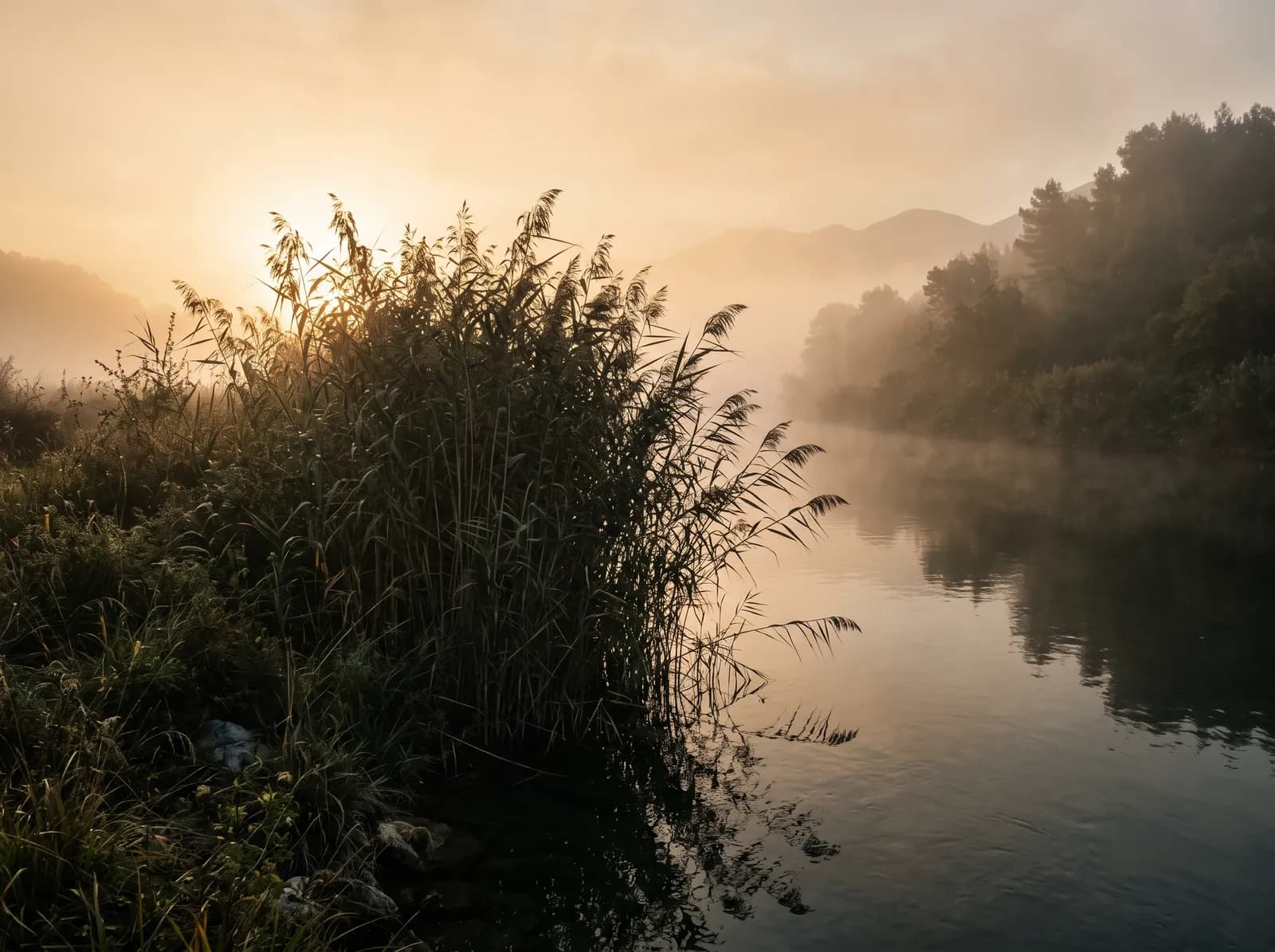
“Syrinx” still means pipe in Greek - the instrument bears the nymph's name. Illustrative photo.
The story was retold by the Roman poet Ovid in the first book of the Metamorphoses. It is one of the oldest surviving tales of the birth of a musical instrument - and to this day the loveliest explanation of why the pan flute sounds so human: according to the myth, the voice of the nymph sings within it.
One of humankind's oldest instruments
The myth has surprisingly deep roots in reality. The oldest surviving pan flute comes from a Neolithic burial ground in Mariupol, Ukraine: seven pipes of bird bone, laid in a grave more than seven thousand years ago. The instrument was evidently prized enough to accompany its owner into the next world.
The pan flute did not arise just once - it was born independently wherever reed grew. Archaeology finds it in China, in the Andes and around the Mediterranean, in forms from cane and bamboo through ceramic all the way to stone and silver.
The pan flute through time
Pan and Syrinx
The Greek myth of the instrument's birth: a nymph turned into reeds and a god who bound pipes from the reed. Recorded by Ovid in the Metamorphoses (Book I).
Mariupol, Ukraine
The oldest surviving pan flute: seven decorated pipes of bird bone in a grave at a Neolithic burial ground.
Chilca, Peru
The oldest American finds - pan flutes roughly 5,700 years old. The Andean branch of the family was born independently of Europe.
Etruscan urns
The oldest European depictions of the instrument on bronze urns from Italy. In ancient Greece the syrinx already firmly belongs to shepherds and poets.
Tomb of Marquis Yi of Zeng
A Chinese tomb yielded two perfectly preserved bamboo paixiao of 13 pipes in the shape of a wing.
Paracas, Nazca, Moche
Andean cultures place ceramic antaras and pipes of cane and silver into graves. The siku still sounds through the Andes today.
The Romanian school and film music
Gheorghe Zamfir and the Romanian nai turn a folk instrument into a world phenomenon - from concert halls to Hollywood.
The pan flute in Czechia
The voice of ancient ages sounds for Czech audiences too - guided by concert player Petr Tomeček.
Key evidence and its sources
The oldest surviving pan flute dates from ~5500 BC.
Seven decorated pipes of bird bone, a grave gift at a Neolithic burial ground in Mariupol, Ukraine.
The Greek myth of Pan and Syrinx was recorded by Ovid in the Metamorphoses.
The tale of the nymph turned into reeds, from which Pan bound pipes, is told in the first book of the Metamorphoses (Book I).
Two bamboo paixiao were found in a tomb from 433 BC.
Perfectly preserved Chinese paixiao of 13 wing-shaped pipes from the tomb of Marquis Yi of Zeng.
Across cultures and continents
Few instruments tell so global a story. The Greeks gave the flute a myth and a name, the Etruscans depicted it in bronze, Andean cultures made it the soul of their music and China refined it into the courtly paixiao. Romania and the Balkans returned it to the world's stages in the 20th century.
This very universality is what is fascinating about the pan flute: the same principle - bound pipes and human breath - was discovered by cultures that knew nothing of one another. As if humankind invented that sound again and again, simply because it needed to hear it.
Modern-day popularity
In the 20th century the Romanian school brought the pan flute back into the spotlight - above all Gheorghe Zamfir, whose recordings and film melodies travelled the world. Its ethereal tone was embraced by film music and crossover alike: from Once Upon a Time in America to Kill Bill.
Today the pan flute sounds in concert halls, churches and at festivals all over the world. And thanks to a handful of professional players - the only one in our country - Czech audiences can hear it live too.
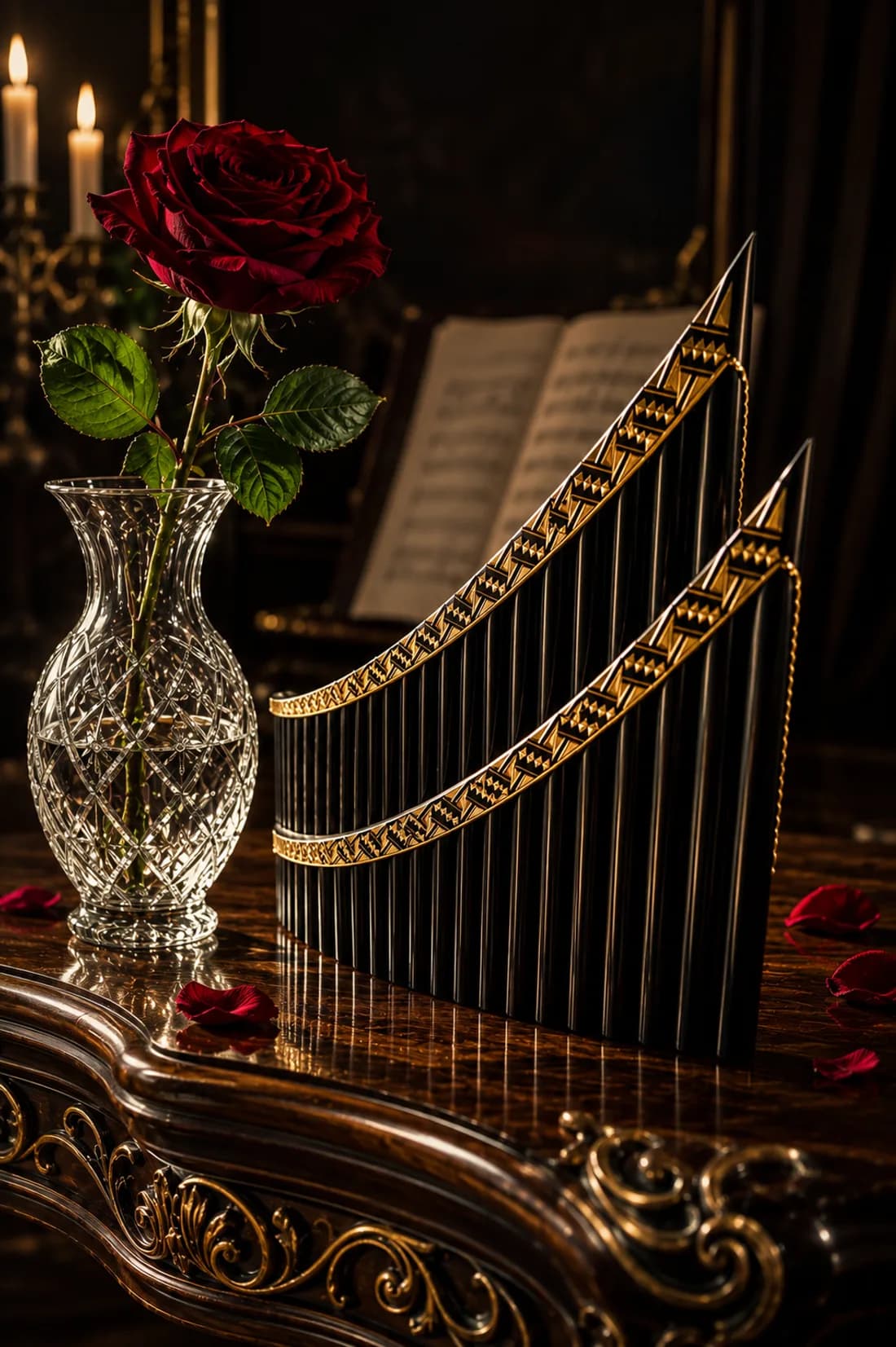
Modern concert instruments. Photo: archive of Petr Tomeček.
Frequently asked questions about the history of the pan flute
The pan flute is among the oldest wind instruments of humankind and arose independently in several places around the world. The oldest surviving instrument comes from a Neolithic burial ground in Mariupol, Ukraine, dated to roughly 5500 BC.
The oldest surviving pan flute is over seven thousand years old. Seven pipes of bird bone were found in a grave at a Neolithic burial ground in Mariupol, Ukraine, dated to roughly 5500 BC.
According to the Greek myth, the god Pan pursued the nymph Syrinx, who turned into reeds by the river Ladon. Pan bound pipes from the reed and named the instrument after the girl - syrinx. The story was recorded by the Roman poet Ovid in the Metamorphoses.
The pan flute sounded in ancient Greece, in the Andes (Peru and Bolivia), in Romania and the Balkans, and in China. The oldest European depictions are on Etruscan bronze urns from 600 to 400 BC.
Two surviving bamboo paixiao of thirteen pipes were found in the Chinese tomb of Marquis Yi of Zeng, dated to 433 BC. The instrument has the shape of an open bird's wing.
Content verified from trustworthy sources; last reviewed July 24, 2026.
Who gave the instrument its world voice?
History is written by masters - from the Romanian school to the only Czech player.